End-Grain Cutting Board Gift Guide
A handmade cutting board is one of those gifts that gets used every single day and outlasts almost everything else in the kitchen.
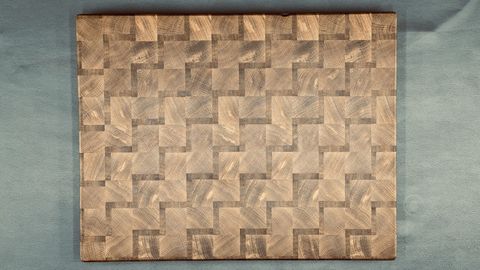
If you ask a seasoned woodworker what project they've given away most often, the answer is almost always a cutting board. Not because it's the easiest build — a well-made end-grain board takes real planning — but because it earns a permanent spot in someone's kitchen the moment they see it. No other gift at the same cost says "I made this" as clearly.
That context is what makes sizing and design decisions matter more for a gift board than for one you're making for yourself. You know how you cook. You don't know whether the recipient has a small apartment kitchen or a sprawling farmhouse layout, whether they carve whole roasts or mostly chop vegetables, or whether they want something understated or a board that stops conversation at a dinner party.
This guide answers those questions systematically so the board you make lands perfectly — not just as an object, but as a tool the recipient reaches for every day.
Why End-Grain for a Gift
An end-grain cutting board is immediately recognizable as something special. The cross-sectional wood fibers absorb knife edges rather than getting cut across them, which means the surface stays beautiful with heavy use. More visibly, the end-grain face exposes the wood's internal geometry — rings, rays, and figure that face-grain boards hide entirely. That's what makes the gift legible: anyone who sees it can tell at a glance it wasn't purchased at a box store.
For a gift, that instant recognizability is part of the value. The recipient doesn't need to explain to houseguests why their cutting board is special — it explains itself.
Sizing Guide: Match the Board to the Occasion
The most common gift-board mistake is going too small. A board that feels substantial in the workshop can look modest once it's competing for counter space against a stand mixer, a knife block, and a coffee maker.
Here's a practical sizing framework by occasion:
| Occasion | Recommended Size | Notes |
|---|---|---|
| Housewarming | 10 × 14 in | Versatile; fits most counters without overwhelming |
| Wedding / couples | 12 × 18 in | Statement size; visually impressive as a gift |
| Baby shower / new parent | 9 × 12 in | Compact, easy to clean quickly |
| Holiday gift (serious cook) | 12 × 18 in or 14 × 20 in | Larger size rewards the investment |
| Thank-you / appreciation | 8 × 10 in | Smaller scale, faster to build, still beautiful |
For weddings and housewarmings specifically, the 12 × 18 format has become the de facto standard — large enough to feel like a real kitchen tool, small enough to store upright in a cabinet. If you know the recipient has a large prep kitchen or loves roasting, 14 × 20 is a meaningful upgrade.
Thickness matters too. A 1.5-inch-thick board looks and feels premium; anything under 1.25 inches can feel thin by comparison. For everyday use, 1.5 to 2 inches is the right range. The extra thickness also absorbs and releases moisture more evenly, which keeps the board flat over time.
Wood Pairings That Look Like a Gift
The wood combination sets the visual register — whether the board reads as warm and natural, graphic and modern, or dramatic and exotic. For gift-giving, the most reliable pairings are ones that look intentional even to someone who doesn't know wood species by name.
Walnut + Maple is the gold standard for a reason. Dark-brown walnut against cream maple creates a contrast that's immediately striking without being jarring. It photographs well, ages gracefully (walnut lightens and maple deepens over time, so they move toward each other), and works in any kitchen regardless of style. If you're unsure what the recipient's kitchen looks like, make this board.
Cherry + Walnut produces a warmer, more monochromatic result that reads as sophisticated. The two species are tonally close, so the pattern shows as subtle texture — you're making something for someone who notices details rather than someone who wants maximum visual drama.
Purpleheart + Maple is the gift for a recipient with a lot of personality. The purple is genuinely vivid at first and fades to a rich reddish-violet over months of use. It's not for every kitchen, but for the right person it's unforgettable.
For a thorough comparison of how these species hold up under daily kitchen use, the guide to choosing the best wood for a cutting board covers Janka hardness, grain stability, and food-safety considerations across all the common hardwoods.
Pattern Choice: Legible vs. Ambitious
The pattern is where gift boards often try to do too much. A complex pattern that's slightly off in execution looks worse than a simple pattern done perfectly.
For most gifts: the checkerboard or the running bond. Both use only two species and only straight crosscuts. They read as deliberately geometric from across a room, require no angled cuts, and are forgiving enough that minor variation in strip width disappears into the overall composition. The checkerboard in particular is a proven crowd-pleaser — bold, clean, and impossible to mistake for anything other than handmade.
For a recipient who'll appreciate the craftsmanship: herringbone or 3D cube illusion. These patterns announce themselves as technically demanding — a herringbone end-grain board gets picked up and examined at every dinner party. But herringbone requires precise miter setups and the 3D cube demands tight tonal control across three species, so only attempt them if you have the experience and tooling to execute them cleanly.
The end-grain cutting board design guide walks through the full construction sequence for any of these patterns, from ripping strips to the final glue-up.
Thickness, Weight, and Practicality
A beautiful board that's too heavy to lift comfortably with one hand won't get used daily. For reference:
- A 12 × 18 × 1.5-inch maple-and-walnut board weighs roughly 6–7 pounds — heavy enough to stay put on the counter, light enough to move to the sink without effort.
- Go much above 2 inches thick and you're adding weight without meaningful functional benefit, unless the recipient specifically wants a butcher-block-style carving station.
- If the recipient is elderly or has limited hand strength, a 10 × 14 board at 1.25 inches thick is more likely to get daily use than a monumental 16 × 22 showpiece.
When in doubt, size for use rather than for visual impact. A board that lives on the counter beats one stored in a cabinet.
Finishing Before You Gift It
Gift boards should arrive ready to use — mineral oil already applied, surface buffed, edges eased. The recipient should be able to put it directly on the counter.
Apply the first coat of food-grade mineral oil while the board is still slightly warm from sanding: the open pores absorb more oil in that first application than any subsequent coat. Let it sit overnight, wipe the surface, and apply a second coat. A beeswax topcoat seals the oil and leaves a soft, dry feel that doesn't transfer to food.
One practical note: apply the finish, let it cure for 24 hours, then give the board a final inspection in bright light. End-grain surfaces sometimes reveal small gaps or tearout after the first oil coat that are invisible when dry. Better to sand and re-finish now than to have the recipient notice it first.
Planning the Dimensions
The geometry behind gift sizing — how many strips you need, what width, how much lumber to buy accounting for kerf and milling losses — benefits from working through digitally before touching lumber. Cutting Board Designer lets you enter board dimensions, strip widths, wood species, and blade kerf, then generates a full cut list and a live 2D preview. It's particularly useful for gifts because you can dial in the exact proportions and pattern before committing to lumber, and adjust strip count or species until the design is exactly what you have in mind.
A handmade end-grain board is one of the few woodworking gifts that genuinely improves with use — the knife marks that accumulate over years become part of the board's character rather than damage to it. Ready to design yours? Cutting Board Designer is available free on the App Store.