Maple, Walnut, Cherry: Choosing the Best Wood for a Cutting Board
Pick the wrong species and you'll end up with a board that splinters, traps bacteria, or destroys your knife edges. Here's how the seven most common cutting-board woods stack up.
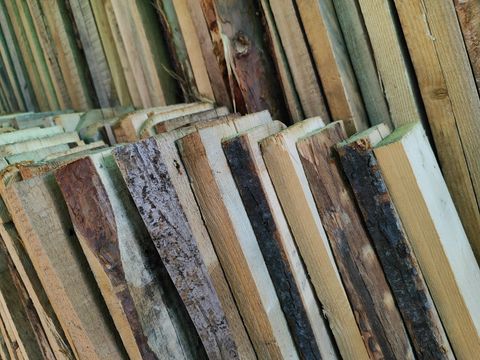
If you're building your first end-grain cutting board, wood selection is the most consequential decision you'll make. The species you pick determines:
- How long the board lasts — softer woods dent and absorb moisture faster.
- How safe it is for food — open-pore woods harbor bacteria.
- What it does to your knives — harder than maple is too hard.
- What it costs — exotic species can be 5–10× the price of domestic hardwoods.
Below is a head-to-head comparison of the seven species most commonly used for cutting boards.
The shortlist
| Wood | Janka hardness | Pore type | Cost | Best for |
|---|---|---|---|---|
| Hard maple | 1,450 lbf | Closed | $ | The default — buy this if you're unsure |
| Black walnut | 1,010 lbf | Closed-ish | $$ | Beautiful contrast against maple |
| Cherry | 950 lbf | Closed | $$ | Boards that age into a deep patina |
| Beech | 1,300 lbf | Closed | $ | Budget alternative to maple |
| Jatoba (Brazilian cherry) | 2,690 lbf | Closed | $$$ | Heavy-duty boards in humid climates |
| Purpleheart | 2,520 lbf | Closed | $$$ | Striking accent strips — rarely a whole board |
| Hard maple + walnut combo | — | — | $$ | The classic checkerboard |
Janka is the industry hardness rating — pounds-force needed to embed an 11.28 mm steel ball halfway into the wood. As a rule of thumb:
- Below 900: too soft for a kitchen board.
- 900–1,500: the sweet spot. Tough enough to last, gentle enough to preserve knife edges.
- Above 2,500: very dense — durable, but accelerates blade dulling and is harder to work with.
Why pore structure matters
A hardwood's pores are tiny tubes that ran sap up through the tree. Open-pore woods (oak, ash, elm) are full of holes you can sometimes feel with a fingernail. Those holes trap food residue and moisture — exactly what you don't want next to raw chicken.
Stick to closed-pore species for any board that touches food. Maple, cherry, walnut, beech, jatoba, and purpleheart are all safe. Oak is not — even though it's hard and cheap, the open grain makes it a poor cutting-board choice.
How to think about color
End-grain boards live or die by their pattern, and pattern needs contrast. Two reliable combinations:
- Maple + walnut — pale cream against chocolate brown. The classic, and for good reason: maximum contrast with woods that age beautifully.
- Maple + cherry + walnut — three-tone gradient. Cherry darkens significantly over the first year, eventually approaching walnut, so plan for the long-term look.
Avoid pairing two pale woods (maple + birch + beech) — the result looks washed out under kitchen lighting. Conversely, all-dark boards (walnut + jatoba + purpleheart) hide the pattern in shadow.
Where to buy
Big-box stores rarely stock proper cutting-board lumber. You're looking for 8/4 (two-inch-thick) S2S or S4S hardwood, kiln-dried to 6–8% moisture content, in lengths of at least 36 inches. Sources:
- Local hardwood dealers — best prices, you can pick the boards. Search for "hardwood lumber [your city]".
- Online specialty shops — Bell Forest Products, Cook Woods, Woodworkers Source. More expensive but ships flat.
- Sawmills — cheapest if you have a planer, but lumber will need flattening.
For a 12 × 18 × 1.5" board with a maple + walnut checkerboard, expect to spend $60–90 in lumber at retail prices.
What about bamboo?
Bamboo is technically a grass, not a hardwood. It's hard (Janka ~1,400) and cheap, but bamboo cutting boards are usually pressed laminates held together with adhesive — they delaminate after a year of dishwashing and don't have the directional grain that makes end-grain boards self-healing. Skip it.
Once you've picked your woods, the next step is planning the cut list. The end-grain cutting board design guide walks through the math step by step — or you can open Cutting Board Designer and skip the spreadsheet entirely.