How to Design Your First End-Grain Cutting Board
End-grain cutting boards look stunning, last for decades, and are gentler on knife edges than face-grain boards. Here's how to plan your first one without wasting wood.
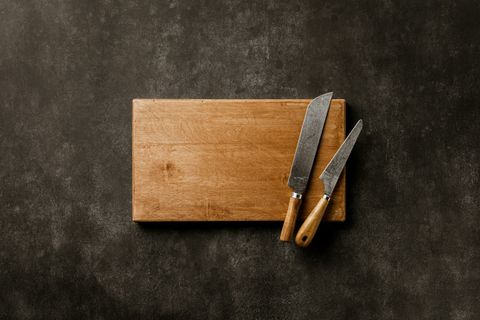
End-grain cutting boards are made by gluing wood strips together, slicing the resulting board crosswise, and re-gluing the slices so the wood fibers stand vertically. The result is a checkerboard or pattern face that's tough on knives in the best way — fibers compress as the blade enters, then spring back, leaving very little visible cut.
The catch: planning the cut list is harder than for a face-grain board. Get the math wrong and you'll either waste expensive wood or end up with a board that's the wrong size. This guide walks through the planning step by step.
1. Start with the finished dimensions
Before picking woods, decide what size board you want. Most home cutting boards land in one of three sizes:
- Small (10" × 14"): good for prep boards, cheese boards, or gifts.
- Medium (12" × 18"): the most common kitchen workhorse size.
- Large (16" × 20"): for serious cooks who want elbow room.
Thickness for end-grain should be at least 1.5" — anything thinner is prone to cracking because end-grain wood moves more across the grain than face-grain.
2. Pick your woods
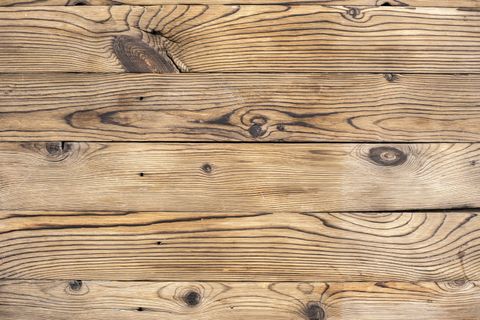
For an end-grain board you want dense, closed-pore hardwoods. The classics:
| Wood | Color | Notes |
|---|---|---|
| Maple | Pale cream | The standard. Cheap, durable, food-safe. |
| Walnut | Chocolate brown | Beautiful contrast against maple. Slightly softer. |
| Cherry | Warm pink-red | Darkens beautifully with age. |
| Purpleheart | Deep purple | Stunning color but very hard on tools. |
| Jatoba | Reddish brown | Extremely dense, takes a great polish. |
Avoid open-pore woods (oak, ash) — they trap food and bacteria. Avoid softwoods entirely. For a deeper comparison of these species — Janka hardness, price, and which combinations work — see choosing the best wood for a cutting board.
3. Plan the pattern
The simplest end-grain pattern is a checkerboard: alternating strips of two woods. To level up, try:
- Brick pattern: offset rows so the joints don't line up.
- Diagonal stripes: angled glue-ups create dynamic patterns.
- 3D illusions: combinations of three woods at specific widths create cubes that appear to pop off the board.
If you're new to this, start with a basic checkerboard. The geometry is forgiving and the result still looks great.
4. Calculate the cut list
This is where most people get stuck. The math:
- Strip width = your finished board thickness (e.g., 1.5").
- Strip length = the finished board's longer dimension + a few inches for waste (e.g., 18" + 4" = 22").
- Strip count = the finished board's shorter dimension ÷ strip width, rounded up (e.g., 12" ÷ 1.5" = 8 strips).
- After glue-up, the cross-cut width = the strip width again (1.5").
- Number of cross-cut slices = finished board's longer dimension ÷ cross-cut width (18" ÷ 1.5" = 12 slices).
Each slice gets rotated 90° and re-glued. You'll lose roughly 1/8" per cut to the saw blade kerf — multiply that by the number of cuts and add it to your raw stock length.
This is exactly the math the Cutting Board Designer app does for you in real time. You set the dimensions, pick woods, and it produces a cut list with kerf already accounted for. If you're planning a board manually, double-check your slice count and add 10% extra wood for safety.
5. Glue-up tips

- Use food-safe Titebond III for kitchen boards — it's water-resistant and FDA-approved for indirect food contact.
- Apply glue to both mating faces, not just one.
- Use plenty of clamps. Aim for one clamp every 4–6 inches along the glue-up.
- Wipe squeeze-out with a damp rag immediately. Dried glue won't take finish.
- Let each glue-up cure at least 24 hours before flattening.
6. Finishing
After flattening on a planer or with a router sled, sand progressively from 80 → 120 → 180 → 220 grit. Finish with a 1:1 mix of food-grade mineral oil and beeswax, applied liberally and wiped off after 20 minutes. Re-oil monthly for the first six months, then as needed.
That's the whole process. The hardest part is the planning — once your cut list is right, the build is straightforward. If you'd rather skip the spreadsheet, Cutting Board Designer lets you design boards visually on your iPhone or iPad, with the cut list and 3D preview generated automatically.